
Cleaning a carburetor is essential for reliable engine performance, whether you maintain motorcycles, lawn equipment, or classic cars. The right chemical makes the difference between a quick tune-up and hours of frustration with lingering deposits.
This guide is for hands-on owners and mechanics who want fast results without risking damage to sensitive carburetor parts. It covers both spray and ultrasonic solutions, so you can choose the method that fits your tools and experience level.
Every product here was selected for its proven ability to dissolve gum, varnish, and sludge, not just surface dirt. Each cleaner is compared for speed, safety, and ease of use, with clear advice on the trade-offs that matter most.
Scan the key takeaways and comparison for a quick answer, or read the buying guide and FAQs for practical tips on choosing the best chemical to clean carburetor for your specific engine and cleaning setup.
| Product | Type | Volume | Metal Safe | VOC Compliance | |
|---|---|---|---|---|---|
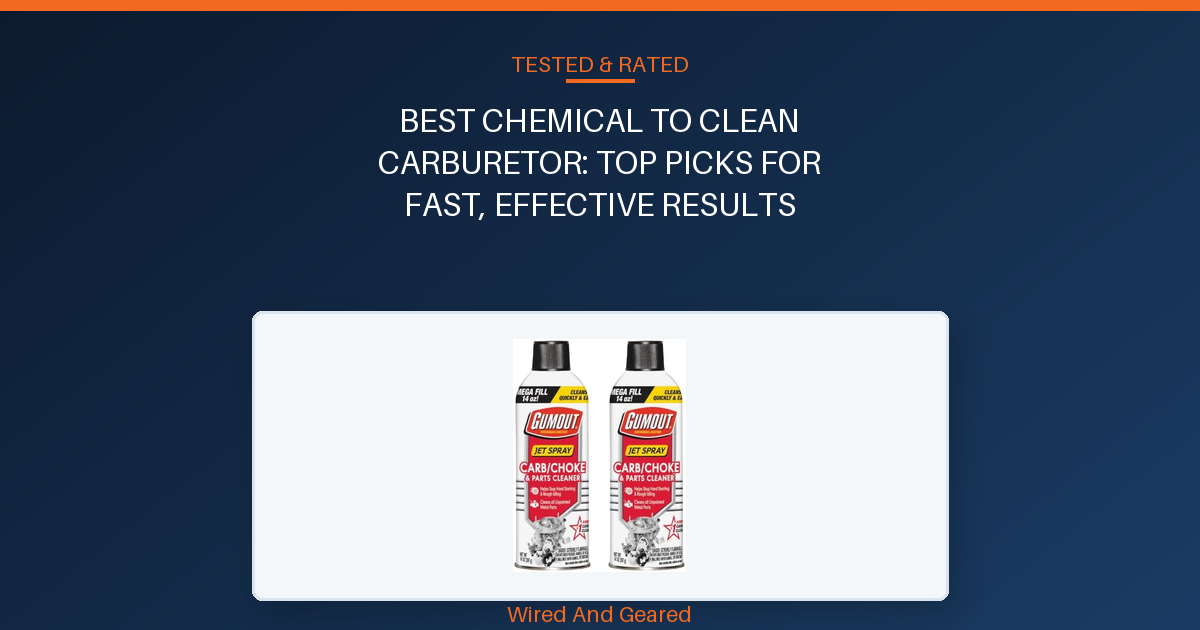
| Gumout Carb & Choke Jet Spray Carburetor Cleaner | Aerosol spray | 2 x 12 oz | Yes, O2 sensor and catalytic converter safe | 50-state compliant | See on Amazon |
| CRC Clean-R-Carb Carburetor Cleaner (50 | Aerosol spray | 12 oz | Yes, O2 sensor and catalytic converter safe | 50-state compliant | See on Amazon |
| NORTHWEST ENTERPRISES Ultrasonic Carburetor Cleaning | Liquid concentrate | 1 gallon | Yes, safe on aluminum, brass, steel, etc. | 50-state compliant | See on Amazon |
| Chromex Ultrasonic Carburetor & Engine Parts Cleaning | Liquid concentrate | 1 gallon | Yes, safe for aluminum, brass, steel, etc. | 50-state compliant | See on Amazon |
| Valvoline Carb, Choke & Throttle | Aerosol spray | 13 oz | Yes, unpainted metals only | 50-state compliant | See on Amazon |
Gumout Carb & Choke Jet Spray Carburetor Cleaner
The jet-spray action targets difficult buildup, blasting away carbon, oil, grease, and sludge from inside and outside carburetors. It cleans linkages, throttle plates, PCV valves, and more, reaching hard-to-access passages with pinpoint accuracy when paired with the included straw.
Fast-drying solvents leave no residue, making it ideal for quick tune-ups and maintenance across cars, trucks, lawn equipment, motorcycles, and ATVs. Reviewers consistently highlight fast results, improved throttle response, smoother acceleration, and restored starting performance.
The industry-trusted formula is safe for O2 sensors and catalytic converters when used as directed, and it is VOC compliant in all states. Many owners use it for both gasoline and diesel carburetors, with positive outcomes for hard starting, rough idle, and high emissions.
The pack of two offers good value for frequent use, but the strong solvents can damage painted surfaces and delicate rubber parts if not protected. It is best for DIYers and pro shops needing fast, reliable cleaning without disassembly.
Skip this if you want a gentler formula for fragile components or need to clean painted surfaces.
Strengths
- Blasts away gum, varnish, and carbon instantly
- Fast-drying, leaves no residue
- Pinpoint cleaning with straw attachment
- Safe for O2 sensors and catalytic converters
- Works on gasoline and diesel engines
Trade-offs
- Can damage painted surfaces
- Harsh on rubber and delicate parts
- Strong chemical odor
CRC Clean-R-Carb Carburetor Cleaner (50
CRC Clean-R-Carb acts quickly, breaking down deposits on venturi, linkages, and butterflies without harming catalytic converters or oxygen sensors. Owners report reliable results for neglected engines, including a 50cc bike that started after years of dormancy.
The formula leaves engine bays spotless and is favored by DIYers for saving time on deep clean tasks, even after multiple cans and heavy use. It meets all VOC regulations, making it legal and safe across all states and for many vehicles and equipment.
Spray action reaches inside carburetors and lines, but the strength can be excessive for softer materials. Several reviewers documented that rubber gaskets, especially on idle air control valves, were destroyed by the cleaner.
For best results, remove rubber components before spraying or have replacements ready. While the cleaner restores performance and idle, it can eat through OEM parts not designed for harsh chemicals.
This product works best for thorough carburetor restoration projects where speed and depth matter. It is less suited for casual maintenance on small engines with delicate gaskets, or for users who want a gentler formula.
Skip this if you need to clean components with fragile rubber seals or are not prepared to replace them.
Strengths
- Dissolves stubborn deposits instantly
- Safe for catalytic converters and O2 sensors
- Legal in all 50 states (VOC compliant)
- Restores idle and performance in neglected engines
- Leaves engine bays spotless
Trade-offs
- Destroys rubber gaskets if not removed
- May require replacement parts after use
- Not effective for some lawn mower carbs without disassembly
NORTHWEST ENTERPRISES Ultrasonic Carburetor Cleaning
This concentrated formula is engineered for ultrasonic cleaners, penetrating cracks, crevices, and blind holes that sprays and scrubbing miss. Reviewers highlight its effectiveness on aluminum carburetors, chainsaw carbs, and engine parts, restoring metal surfaces without pitting or oxidation.
One owner used it for a 30-year-old carburetor and reported a bright, clean finish that cheap citrus-based solutions failed to deliver. It performs well for carburetor rebuilds and restores throttle response, especially when run for 30 minutes per cycle.
Pairing it with an ultrasonic machine achieves results that manual washing cannot, cleaning both exterior and interior parts thoroughly. The formula is safe on many metals and avoids harsh ingredients, supporting sensitive components and avoiding environmental hazards.
However, the price is steep compared to dish soap alternatives, and some reviewers felt it performed similarly to standard cleaners for small parts. It is ideal for those with ultrasonic tanks needing professional-grade cleaning and restoration, especially of older or delicate aluminum parts.
Skip this if you lack an ultrasonic cleaner or are looking for a low-cost, basic solution.
Strengths
- Cleans deep internal passages with ultrasonic cavitation
- Bright finish on aluminum without oxidation
- Safe on most engine metals (aluminum, brass, steel, etc.)
- Avoids harsh chemicals and environmental hazards
- Restores performance on old carburetors
Trade-offs
- High price compared to standard cleaners
- Requires ultrasonic tank for best results
- Similar performance to soap for basic small parts
Chromex Ultrasonic Carburetor & Engine Parts Cleaning
This concentrated formula is designed for ultrasonic machines, dissolving tough fuel varnish, gum, and carbon from engine parts. Owners report success cleaning carburetors, injectors, and pistons, with the solution penetrating blind holes and microscopic crevices that manual scrubbing leaves untouched.
The high concentration allows economical dilution, producing gallons of cleaning fluid from a single 128 oz bottle. The formula is non-corrosive and safe for aluminum, brass, cast iron, copper, and zinc alloys, reducing risk of damage to delicate engine metals.
Its versatility extends to fuel injectors and precision instruments, making it useful for complex restoration tasks. However the need for proper dilution (1:5 to 1:10 ratio), as incorrect mixing can lead to subpar results.
Performance is adequate for routine cleaning, but it lacks the brightening effect and depth of premium ultrasonic solutions. It is best for budget-conscious users with ultrasonic tanks handling regular carburetor maintenance.
Skip this if you demand top-tier restoration or want a ready-to-use formula.
Strengths
- Economical concentrate produces multiple gallons
- Safe for aluminum and other engine metals
- Penetrates blind holes and crevices
- Versatile for carburetors, injectors, and precision parts
- Non-corrosive formula
Trade-offs
- Requires careful dilution for optimal results
- Does not brighten aluminum like premium cleaners
- Limited reviews compared to leading brands
Valvoline Carb, Choke & Throttle
Valvoline’s extra-strength solvents break down carbon, gum, and varnish fast, restoring cleaner operation and smoother engine performance. Owners report improved starting, reliability, and reduced issues caused by deposit buildup, especially on carburetors, throttle bodies, and intakes.
The formula is VOC compliant and avoids chlorinated solvents, making it safer for the environment while still delivering powerful cleaning. The spray is effective on critical unpainted metal parts, reaching areas that restrict airflow and fuel delivery.
It clears away contaminants that cause rough idle and stalling, supporting smoother ignition and dependable performance. Versatility extends to multiple system components, keeping parts free of harmful buildup and prolonging engine life.
However, the aggressive formula can damage painted surfaces and rubber components, so it should only be used on unpainted metal. It is best for owners dealing with stubborn, hard-to-remove deposits in carburetors and throttle bodies.
Skip this if you need a gentler cleaner or must clean painted or rubber parts.
Strengths
- Breaks down carbon, gum, and varnish deposits fast
- Improves starting and reliability
- VOC compliant and non-chlorinated
- Effective on carburetors, throttle bodies, and intakes
- Supports smoother ignition
Trade-offs
- Can damage painted surfaces
- Harsh on rubber components
- Must be used only on unpainted metal
01Cleaning Power
Choose a cleaner that dissolves gum, varnish, and sludge rather than just surface dirt. Sprays with strong solvents work quickly, but can be harsh on sensitive parts. Avoid solutions that require hours of soaking unless you have stubborn buildup or intricate components.
02Application Method
Spray cleaners are fast and easy for most carburetors, reaching jets and passages directly. Ultrasonic solutions are ideal for complex or heavily clogged carburetors, but require an ultrasonic tank. Don’t buy a bulk solution if you only need spot cleaning.
03Safety for Materials
Check compatibility with aluminum, brass, rubber, and plastic parts. Strong solvents can damage gaskets or discolor metal. Always read the label and avoid using aggressive cleaners on painted or coated surfaces.
04Residue and Odor
A good carburetor cleaner evaporates cleanly without leaving residue or strong chemical odor. Products that linger or require extra rinsing add time and risk. Avoid formulas that give off turpentine-like smells or need follow-up cleaning.
05VOC Compliance and Flammability
If you work in a garage or near open flames, choose a VOC-compliant, less flammable formula. Many sprays are highly flammable, so store them safely and use precautions. Ignoring flammability risks is a common mistake, especially with strong solvents.