
Choosing the best chemical to clean carburetor can determine whether your engine runs smoothly or struggles with residue and buildup. The right cleaner saves hours of frustration and prevents costly repairs by dissolving tough deposits and freeing stuck parts.
This guide is for anyone maintaining motorcycles, lawn equipment, classic cars, or small engines with a carburetor. It covers both quick spray solutions and deep ultrasonic cleaners so you can match your cleaning method to your needs.
Every pick here is based on proven performance and compatibility with common carburetor materials. Whether you need a fast spray for routine cleaning or a gallon solution for full rebuilds, the recommendations are practical and specific.
Scan the takeaways and comparison to quickly spot the winner, then dive into the buying guide for expert tips on avoiding common mistakes and getting the best results.
// We test hands-on, buy what we cover, and never let commissions shape our picks.
| Product | Type | Volume | VOC Compliance | Sensor Safe | |
|---|---|---|---|---|---|
| CRC Clean-R-Carb Carburetor Cleaner (50 | Aerosol spray | 12 oz | 50-state | Yes | See on Amazon |
| NORTHWEST ENTERPRISES Ultrasonic Carburetor Cleaning | Ultrasonic concentrate | 1 gallon | Best value | Best value | See on Amazon |
| Valvoline Carb, Choke & Throttle | Aerosol spray | 13 oz | 50-state | Yes | See on Amazon |
| Chromex Ultrasonic Carburetor & Engine Parts Cleaning | Ultrasonic concentrate | 1 gallon | Shops and rebuilders cleaning batches of carburetors and engine parts in ultrasonic baths | Shops and rebuilders cleaning batches of carburetors and engine parts in ultrasonic baths | See on Amazon |
| Gumout Carb & Choke Jet Spray Carburetor Cleaner | Aerosol spray | 2 x 13 oz | 50-state | Yes | See on Amazon |
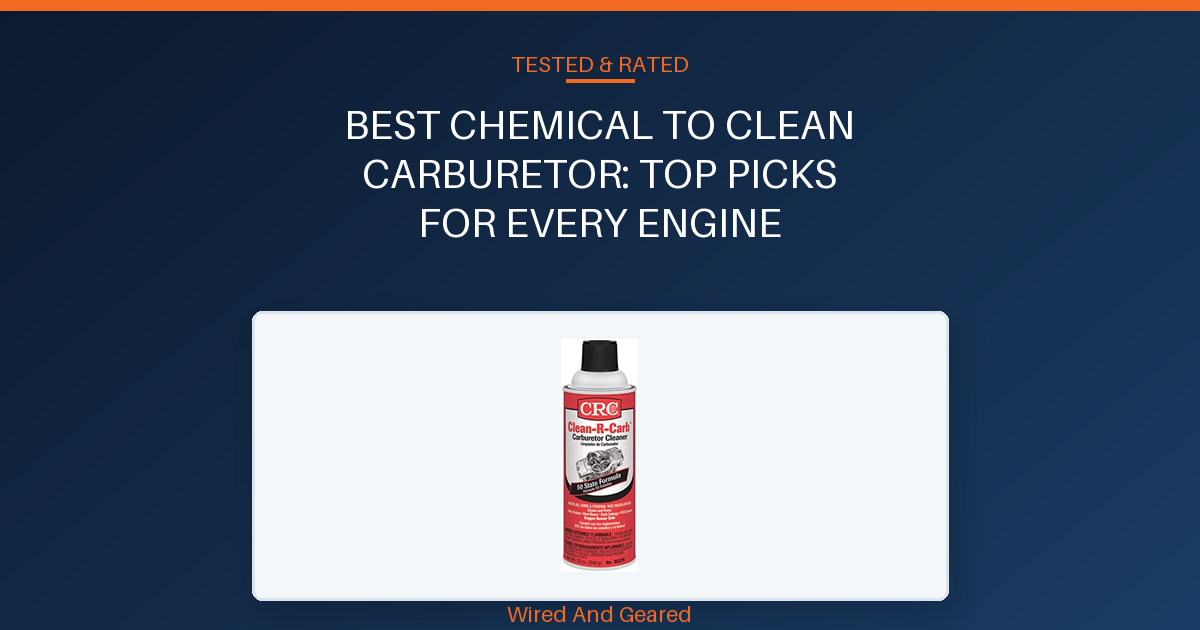
CRC Clean-R-Carb Carburetor Cleaner (50
CRC Clean-R-Carb cuts through carbon, gum, and varnish on carburetor components within minutes, restoring performance without second passes. The formula is safe for catalytic converters and oxygen sensors, making it a solid choice for modern vehicles and older engines alike.
Its 50-state VOC compliance means it can be used anywhere in the US without regulatory headaches, a rare advantage for DIYers and shops facing local restrictions. The cleaner reaches venturi, linkages, butterflies, and PCV systems, dissolving buildup that reduces fuel efficiency and throttle response.
Reviewers consistently highlight its ability to improve engine smoothness and starting reliability after application. The spray action delivers enough force to penetrate tight passages, but it dries quickly to prevent residue, so follow-up cleaning is minimal compared to slower liquid soak methods.
The aerosol can runs out quickly if used on larger jobs, so it’s best for targeted maintenance rather than full engine overhauls. A few mention price as a concern for frequent use, especially given the 12 oz size.
Skip this if you need bulk cleaning for multiple carburetors, or if you require a solution for ultrasonic baths.
Strengths
- Dissolves tough deposits rapidly
- Safe for catalytic converters and O2 sensors
- 50-state VOC compliant for universal use
- Improves fuel economy and throttle response
- No residue, dries fast
Trade-offs
- Small can runs out quickly on big jobs
- Pricey for frequent or bulk cleaning
- Not suitable for ultrasonic cleaning
NORTHWEST ENTERPRISES Ultrasonic Carburetor Cleaning
This concentrated ultrasonic fluid excels at cleaning carburetors and small engine parts when paired with an ultrasonic machine. It removes dirt, varnish, and gum from interior and exterior surfaces, including blind holes and crevices that sprays can’t reach.
Owners report aluminum parts coming out bright and residue-free, with zero oxidation or pitting even after 30-year-old carbs are treated. The solution is safe for most metals, including aluminum, brass, cast iron, copper, magnesium, and zinc.
It does not contain borates, phenols, nitrates, or EPA-listed hazardous ingredients, reducing risk to both parts and users. The gallon size is economical for repeated use, though some buyers see the price as steep compared to dish soap or cheaper citrus alternatives that may discolor sensitive metals.
While performance is generally excellent, a few reviewers describe it as “more like soap” and question its value for cleaning non-carb parts. It works best for ultrasonic cleaning and is not intended for manual scrubbing or aerosol-style spot cleaning.
Skip this if you lack an ultrasonic machine or want faster, single-use cleaning.
Strengths
- Penetrates blind holes and crevices
- Leaves aluminum bright without oxidation
- Safe for most engine metals
- No hazardous ingredients
- Works well in ultrasonic cleaners
Trade-offs
- Expensive compared to manual cleaners
- Requires ultrasonic machine for full effect
- Not a spray, so not for spot cleaning
Valvoline Carb, Choke & Throttle
Valvoline’s spray formulation is designed for breaking down carbon, gum, and varnish deposits in carburetors, throttle bodies, and intakes. The extra strength solvents clear away stubborn contaminants that restrict airflow and fuel delivery, directly improving engine startup and idle.
It is VOC compliant and free of chlorinated solvents, so it meets environmental standards without sacrificing cleaning power. The cleaner works fast, making it ideal for quick tune-ups or addressing hard starting and rough idle.
It targets unpainted metal parts, reliably restoring system reliability and reducing issues caused by deposit buildup. Its versatility extends to throttle bodies and intakes, so it’s suitable for multi-component maintenance in one session.
The 13 oz can is sufficient for most single carburetor jobs, but may be undersized for repeated maintenance or large engine rebuilds. It is not intended for ultrasonic cleaning or bulk applications, and the price per ounce is higher than gallon concentrates.
Skip this if you need bulk cleaning or ultrasonic compatibility.
Strengths
- Breaks down tough deposits fast
- Improves starting and idle performance
- VOC compliant, safe formula
- Effective on carburetors, throttle bodies, intakes
- Restores airflow and fuel delivery
Trade-offs
- Small can limits use to single jobs
- Not suitable for ultrasonic systems
- Higher price per ounce than concentrates
Chromex Ultrasonic Carburetor & Engine Parts Cleaning
Chromex is a concentrated degreaser formulated for ultrasonic cleaning of carburetors, fuel injectors, and engine parts. Its high concentration means a single gallon can produce up to 10 gallons of cleaning fluid when diluted, making it economical for shops and frequent users.
The solution dissolves fuel varnish, gum, sludge, and carbon, reaching blind holes and microscopic crevices that manual scrubbing misses. The formula is non-corrosive and safe for aluminum, brass, steel, and other delicate engine metals, so it does not cause pitting or oxidation.
Dilution ratios from 1:5 to 1:10 allow customization for heavy or light cleaning jobs. It is versatile enough for restoring precision instruments and heat exchangers, but the reviews indicate it is best suited for ultrasonic machines rather than manual cleaning.
With only 12 reviews, performance feedback is limited, but the value for bulk cleaning stands out. Some complaints focus on the need for precise dilution and the lack of spray compatibility.
Skip this if you need a fast, spot cleaner or do not own an ultrasonic cleaner.
Strengths
- Economical dilution for bulk cleaning
- Dissolves tough engine deposits
- Safe for aluminum and other metals
- Reaches microscopic crevices
- Customizable strength for different jobs
Trade-offs
- Requires ultrasonic machine for full effectiveness
- Needs careful dilution for best results
- Not suitable for spot or spray cleaning
Gumout Carb & Choke Jet Spray Carburetor Cleaner
Gumout’s powerful jet-spray action blasts away gum, varnish, carbon, oil, grease, and sludge on carburetors, throttle plates, PCV valves, and linkages. The fast-drying formula leaves no residue, reaching hard-to-access passages and restoring throttle response and acceleration.
Reviewers consistently report engines starting reliably and running smoother after use, with visible results in minutes on neglected small engines and generators. The formula is industry-trusted and safe for catalytic converters and O2 sensors, making it suitable for gasoline and diesel carburetors in cars, trucks, ATVs, motorcycles, and lawn equipment.
The pack of two cans offers good value, especially for DIY tune-ups and pro shops that require frequent cleaning. The spray can be used with or without an optional straw for pinpoint cleaning, making it versatile for tight engine bays.
The spray can is small for large engine bays, so multiple cans may be needed for extensive cleaning. A few note that stubborn deposits may require repeated application or follow-up scrubbing.
Skip this if you need ultrasonic cleaning or want a larger bulk solution for repeated use.
Strengths
- Blasts away tough deposits quickly
- No residue, dries fast
- Safe for catalytic converters and O2 sensors
- Pack of two offers strong value
- Restores throttle response and reliable starts
- Versatile for multiple vehicle types
Trade-offs
- Small cans may run out on big jobs
- May require repeat application for heavy buildup
- Not compatible with ultrasonic cleaning
01Cleaning Power
A carburetor cleaner must dissolve gum, varnish, and carbon deposits quickly and completely. Look for products rated for heavy-duty removal and capable of freeing stuck choke and throttle plates. Avoid weak formulas that only clean surface dirt, as these leave behind buildup and can worsen performance.
02Material Safety
Choose chemicals compatible with aluminum, brass, and steel to prevent pitting or discoloration. Corrosive cleaners can damage carburetor parts, especially on classic or small engines. Always check the label for material compatibility, and avoid generic degreasers that may harm sensitive components.
03Application Method
Sprays are best for quick cleaning and hard-to-reach places, while ultrasonic solutions suit full rebuilds and deep internal cleaning. Match your cleaner to the job: use sprays for routine maintenance, and ultrasonic for parts restoration. Using the wrong method wastes time and may miss hidden deposits.
04Regulatory Compliance
VOC regulations restrict certain chemicals, so a compliant formula is essential if you live in states with strict environmental laws. Non-compliant products may not be legal to buy or use, and can pose health risks. Always confirm compliance before purchasing, especially for sprays.
05Residue and Odor
A good carburetor cleaner leaves no residue, preventing recurring issues and strange smells. Residual chemicals can gum up the system or cause turpentine-like odors. Choose a formula that rinses clean and eliminates odors for reliable performance.