
Choosing the right SD card affects how fast your camera shoots, how many photos you store, and whether your video files stay intact. Photographers and videographers need a card that matches both their camera’s capabilities and their shooting habits.
This guide is made for anyone from hobbyists to working pros who want dependable performance and clear answers on which SD card to buy. It covers cards suited for everything from casual snapshots to demanding 4K video production.
Every recommendation here is practical, based on real-world speed, reliability, and what actually fits digital cameras today. The focus is on cards you can trust not to bottleneck your camera or lose your files.
Scan the key takeaways and buying guide to find which card matches your camera and workflow. The comparison highlights the strengths and trade-offs so you can buy with confidence.
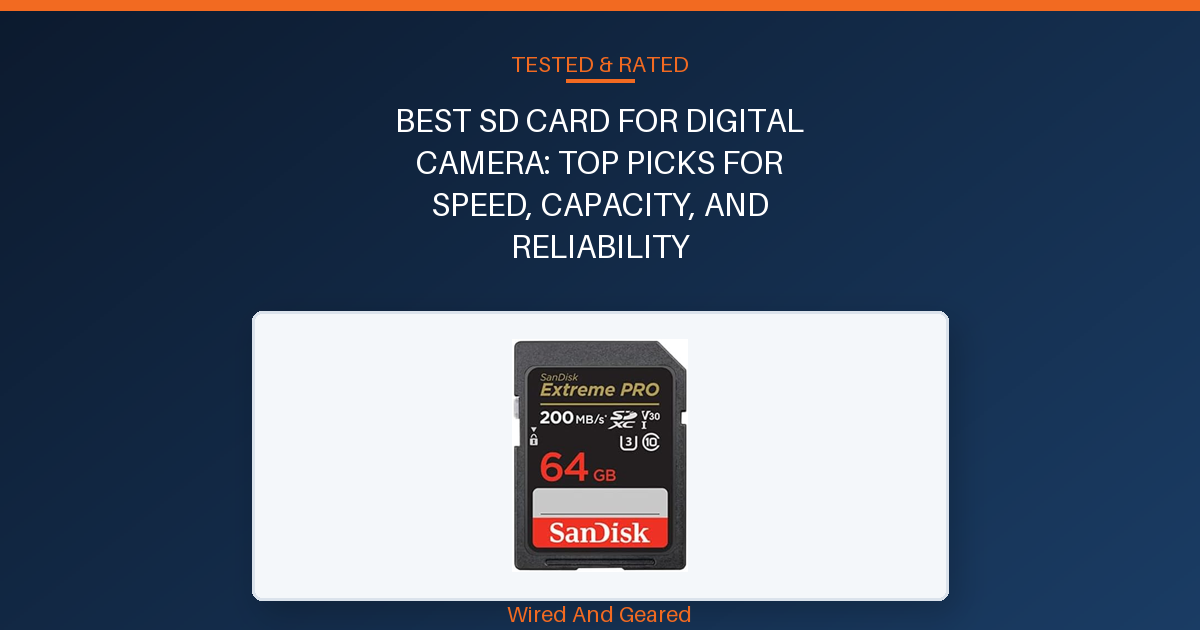
TL;DR: The SanDisk 64GB Extreme PRO SDXC UHS-I Memory Card is the best sd card for digital camera, balancing professional-grade speed, reliability, and 4K support for most users. The SanDisk 256GB Extreme PRO SD Memory Card is the runner-up, offering greater storage for those shooting intensive bursts or lengthy 4K video.
Our overall best pick: SANDISK 64GB Extreme PRO SDXC UHS-I Memory Card – C10 →
| Product | Capacity | Read Speed | Write Speed | Speed Class | |
|---|---|---|---|---|---|
| SANDISK 64GB Extreme PRO SDXC UHS-I Memory Card – C10 | 64GB | Up to 200MB/s | Up to 90MB/s | UHS-I U3, V30, Class 10 | See on Amazon |
| SanDisk 128GB Ultra SDXC UHS-I Memory Card – 100MB/s | 128GB | 100MB/s | Lower than read, not specified | Class 10, UHS-I U1 | See on Amazon |
| SANDISK 256GB Extreme PRO SD Memory Card | 256GB | Up to 200MB/s | Up to 140MB/s | UHS-I U3, V30, Class 10 | See on Amazon |
| SANDISK 256GB Ultra SD Memory Card | 256GB | Up to 150MB/s | Lower than read, not specified | UHS-I U1, Class 10 | See on Amazon |
| SanDisk 32GB Ultra 100MBs SDHC Memory Card | 32GB | Up to 100MB/s | Not specified, slower than high-end cards | SDHC, Class 10 | See on Amazon |
SANDISK 64GB Extreme PRO SDXC UHS-I Memory Card – C10
Read speeds up to 200MB/s (with compatible devices) and write speeds up to 90MB/s make this card stand out for fast shooting and smooth 4K video recording. The UHS-I U3, V30, and Class 10 ratings guarantee smooth capture of high-resolution photos and UHD video without lag or buffer delays.
Reviewers highlight flawless performance in Canon EOS R, OM-5, and other professional cameras, with no compatibility or formatting issues, even after years of heavy use. Durability is a core strength, with temperature-proof, waterproof, shockproof, and X-ray-proof features letting you shoot in challenging environments.
Storage is ample for most projects, and the card is recognized instantly by cameras, handling sequential burst mode photography with ease. Print quality and image consistency remain high even after repeated use, and the card fits securely in camera slots and protective cases.
The only drawbacks are price and the need for QuickFlow-compatible devices to get maximum speeds. If you only shoot basic photos or Full HD video, this card may be overkill.
For anyone working professionally or pushing their camera’s limits, it is a dependable workhorse that will not bottleneck your workflow.
Strengths
- Up to 200MB/s read speed for rapid file transfers
- 90MB/s write speed supports 4K video and burst photography
- UHS-I U3, V30, and Class 10 ratings for high-end performance
- Highly durable: temperature, water, shock, and X-ray proof
- Instant camera recognition and flawless formatting
- Reliable storage for professional workflows
Trade-offs
- Price is higher than basic SD cards
- Maximum read speed requires QuickFlow-compatible devices
- Overkill for simple point-and-shoot or Full HD use
SanDisk 128GB Ultra SDXC UHS-I Memory Card – 100MB/s
Transfer speeds reach up to 100MB/s, which is fast enough for everyday shooting and quick file offloads but not suitable for 4K video or rapid burst modes. The Class 10 and UHS-I U1 ratings ensure smooth Full HD video recording in most compact and mid-range cameras, though write speeds are notably lower than premium cards.
Storage options from 32GB to 256GB cover most casual users’ needs and prevent running out of space during a weekend trip or family event. The card holds up well for routine use and is easy to install, with compatibility across many camera models.
There are no recurring reports of card failure or formatting hassles, and it offers peace of mind for those who simply want their camera to work without fuss. However, professionals or anyone shooting RAW bursts or 4K should skip this, as performance bottlenecks will appear under those demands.
The main trade-off is speed. Write rates lag behind the read speeds, making it less ideal for fast shooting or heavy video workloads.
For the price, it delivers stable storage and reliable performance, but it falls short for demanding workflows or high-end cameras.
Strengths
- Up to 100MB/s transfer speeds for quick file offloads
- Class 10 and UHS-I U1 ratings support Full HD video recording
- Wide compatibility with compact to mid-range cameras
- Storage options up to 256GB for extended sessions
- Consistent reliability with no card failures reported
Trade-offs
- Write speeds are slower than premium cards
- Not suitable for 4K video or RAW burst shooting
- Limited to Full HD performance
SANDISK 256GB Extreme PRO SD Memory Card
With read speeds up to 200MB/s and write speeds up to 140MB/s, this card handles continuous RAW bursts and long 4K video sessions without buffering. The UHS-I U3, V30, and Class 10 ratings ensure compatibility with high-end DSLRs and mirrorless cameras, including Canon R6 M2, Nikon D7100, and GoPro.
Large 256GB capacity means you can shoot thousands of high-res images or hours of UHD video without swapping cards, a major plus for travel or event work. Formatting and setup are straightforward, with instant camera recognition and hassle-free operation.
Reviewers report stable performance after months of heavy use, with no data loss or corruption. The card is reliable for both storing raw files and delivering finished projects to clients, making it versatile for field use and post-production.
Drawbacks are limited: price is high, and some older cameras may not support such large capacities. Make sure your device is compatible before buying.
If you need maximum speed and space for pro workflows, this card delivers. For casual shooters or older models, it is unnecessary and may not be supported.
Strengths
- Up to 200MB/s read speeds for quick offloads
- 140MB/s write speeds ideal for RAW and 4K workflows
- Huge 256GB capacity reduces card swaps
- UHS-I U3, V30, Class 10 for broad compatibility
- Stable performance even after months of heavy use
Trade-offs
- High price compared to entry-level cards
- Not all older cameras support 256GB SDXC
- Overkill for basic photography
SANDISK 256GB Ultra SD Memory Card
Read speeds up to 150MB/s make file transfers snappy, and the Class 10, UHS-I U1 rating is sufficient for Full HD video recording. The 256GB capacity means you can shoot hundreds of photos or hours of 1080p video without worrying about space.
It’s easy to install, works in most compact and mid-range cameras, and delivers steady performance for routine use. Quality is consistent, with no recurring complaints about card failures or compatibility.
Reviewers report lightning-fast transfers to computers and devices, plus reliable operation in game cameras, consoles, and laptops. For the price, it’s an easy upgrade for anyone needing more space or faster transfers than old entry-level cards.
Main drawbacks are limited support for 4K or high-speed burst shooting, and occasional compatibility issues if used in devices requiring higher-speed classes. If you need pro-level speed or shoot RAW/4K, this isn’t the right card.
For everyday photography and video, it’s a dependable, affordable choice.
Strengths
- Up to 150MB/s read speeds for fast transfers
- 256GB capacity stores thousands of photos and hours of Full HD video
- Reliable performance with no card failures reported
- Easy installation and broad compatibility
- Affordable price for large storage
Trade-offs
- Write speeds are lower than Extreme PRO series
- Not suitable for 4K or burst RAW shooting
- Occasional compatibility issues in high-end devices
SanDisk 32GB Ultra 100MBs SDHC Memory Card
With a 32GB capacity and up to 100MB/s read speeds, this card is tailored for basic cameras, trail cams, and general storage needs. It’s recognized instantly by most devices, installs easily, and avoids formatting headaches even in older models.
The build quality is sturdy, with secure contacts and casing that hold up to frequent handling and swaps. Performance is steady for everyday photos and videos, and reviewers report flawless operation in Canon EOS 1000D, ResMed CPAP, and MemoryVault devices.
For the price, it’s a practical choice for those who don’t need high capacity or advanced speed classes. Water-resistant and impact-resistant features add peace of mind for routine outdoor use.
Drawbacks include limited space for extended shoots and slower write speeds compared to higher-end cards. It is not suitable for 4K video or RAW bursts, and fills up quickly if used for large projects.
For basic needs and older gear, this card is a dependable, affordable solution.
Strengths
- Fast 100MB/s read speeds for quick transfers
- Fits securely in SD slots with durable build
- Instant recognition and easy installation
- Water-resistant and impact-resistant design
- Affordable price with solid reliability
Trade-offs
- Limited 32GB capacity fills up fast
- Not suitable for 4K video or RAW burst shooting
- Write speed not specified, lower than premium cards
01Speed Class
Speed determines how quickly your camera can write images and video. Look for UHS-I or UHS-II, and a minimum V30 for reliable 4K recording. Many cards list their maximum speed, but sustained speed is what matters for video and rapid burst shooting. Avoid generic cards with only ‘Class 10’ ratings if you shoot video.
02Capacity
Choose a card with enough space for your typical session. 64GB is now the minimum for most photographers, as 32GB fills up fast with RAW files or HD video. Higher capacities like 128GB or 256GB are worth it for long shoots or frequent travel. Don’t overspend on huge cards if your camera or workflow doesn’t require it.
03Reliability
A card’s failure can mean lost images, so stick with reputable brands and proven product lines. Cards with strong track records in professional use are less likely to corrupt or fail. Avoid bargain cards from unknown brands, which are prone to errors and shorter lifespans.
04Compatibility
Check your camera’s manual or specs to ensure it supports SDXC for larger cards. Older cameras may only accept SDHC or standard SD, which limits capacity. Buying a card that’s too new or too big for your device results in wasted money and non-functional storage.
05Price to Performance
Speed and reliability justify spending a bit more, but don’t pay for features you won’t use. For casual snapshots, budget cards suffice, but they struggle with high-volume or 4K video. Avoid overspending on ultra-fast cards unless your camera takes advantage of the extra speed.