
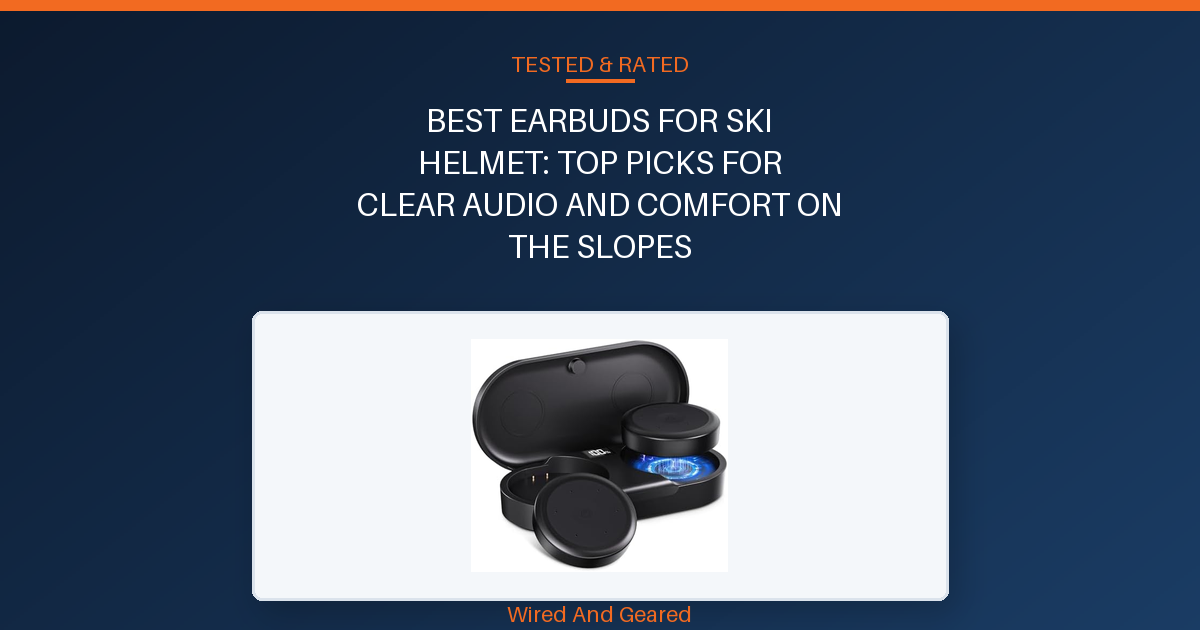
Choosing the right earbuds for your ski helmet means the difference between crisp music and fumbled controls on the mountain. This guide focuses on earbuds that actually fit inside ski helmets, stay comfortable during long sessions, and perform well in cold conditions.
If you ski regularly, you need earbuds with reliable battery life and controls you can use with gloves. Occasional skiers or snowboarders can get by with simpler options, but frequent riders will appreciate premium features like clear audio and easy touch controls.
We compare the most popular ski helmet earbuds based on real-life fit, sound quality, ease of use, and durability. Each pick is evaluated for how it handles wind, sweat, and glove operation.
Read the verdicts, check the comparison table, and use the buying guide to avoid common mistakes like buying earbuds too bulky to fit your helmet or with controls impossible to use on the lift.
| Product | Battery Life | Bluetooth Version | Water Resistance | Pad Thickness | |
|---|---|---|---|---|---|
| Doohoeek 2025 Ski Helmet Speaker | 50 hours (with case) | 5.3 | IPX5 | Ultra-slim | See on Amazon |
| Origem Ski Helmet Speakers, Wireless | Multiple full days | 6.0 | Not specified | Standard | See on Amazon |
| Motorcycle Bluetooth Headset Speaker Skiing Earphone | 32 hours | 5.3 | IPX6 | 10mm | See on Amazon |
| IHAO HAO Swimming Headphones True Bone Conduction Open Ear | 8 hours | 5.0 | IP68 | Bulky | See on Amazon |
| OutdoorMaster Ski Helmet Headphones Wireless Bluetooth | 30 hours (with case) | 5.3 | Not specified | 13.7mm | See on Amazon |
Doohoeek 2025 Ski Helmet Speaker
Doohoeek stands out for its slim design that integrates smoothly into audio-ready helmets. The speaker pads sit flush, avoiding pressure points and preserving helmet comfort and safety.
Bluetooth pairing is fast and stable, and the controls are genuinely glove-friendly, with a single large button that can pause, adjust volume, or skip tracks without fiddling. Battery life is a major highlight, lasting up to 50 hours with the charging case, so you won’t need a midday recharge even on multi-day trips.
The IPX5 water resistance protects against snow and sweat, making these dependable for winter sports and mountain biking. Hands-free call quality is mixed: the caller hears clearly, but the recipient may struggle with noise, so it’s best for short conversations.
Sound quality is decent for helmet speakers, though not audiophile grade, and reviewers consistently note it’s better than bone conduction alternatives but still limited compared to regular earbuds. The pads stay comfortable and secure inside helmets, but skip this model if you demand booming bass or crystal-clear calls.
Strengths
- Ultra-slim pads fit most helmet pockets without adding bulk
- 50-hour battery life with charging case
- Glove-friendly controls with a large multifunction button
- IPX5 water resistance for snow and sweat
- Fast and stable Bluetooth 5.3 pairing
Trade-offs
- Sound quality is only average, with limited bass
- Call clarity suffers for the recipient
- Not suitable for audiophile-level listening
Origem Ski Helmet Speakers, Wireless
Origem’s wireless helmet speakers are praised for their loud volume and compatibility with most audio-ready helmets. The battery lasts for several full ski days, backed up by a convenient charging case that works like AirPods.
Controls are large and easy to operate with gloves, making them practical for the slopes. Sound quality is solid for casual listening, though bass is limited and won’t satisfy audiophiles.
The pods stay secure in some helmet pockets but can slip out in others, especially in medium-sized Sedici helmets, causing hassle during helmet removal. Charging ports inside the case aren’t secure, if bumped or upside down, pods can disconnect.
Connectivity is stable, but pairing after switching devices can be fiddly. For the price, Origem delivers reliable music and audiobook playback for most users, but those with smaller helmet pockets or seeking full bass should look elsewhere.
Strengths
- Loud volume suitable for outdoor use
- Battery lasts multiple ski days
- Fits most audio-ready helmets
- Charging case is convenient
- Glove-friendly button controls
Trade-offs
- Speaker pods can slip out of helmet pockets and charging ports
- Bass is limited
- Pairing process can be tricky after switching devices
Motorcycle Bluetooth Headset Speaker Skiing Earphone
SUOOKC’s headset is exceptionally thin at 10mm, fitting all helmets without ear discomfort. The audio is surprisingly loud, with effective noise cancellation that isolates music even at high volumes.
Battery life is unmatched, running 32 hours continuously or 360 hours standby on a single charge, and Type-C charging is quick. Controls are simple but sometimes frustrating, with volume adjustment requiring a long button press that lacks precision.
The microphone works well for music and voice assistant use, but phone calls are less clear and there’s no intercom feature. Installation is straightforward, with ample wire to tuck under padding for a clean finish.
The sound quality is good for music but not premium, and the lack of intercom makes it less ideal for group communication.
Strengths
- Extremely thin pads (10mm) fit all helmets comfortably
- Very loud and effective noise cancellation
- 32-hour continuous battery life
- Easy installation with enough wire for clean setup
- Type-C fast charging
Trade-offs
- Volume adjustment is imprecise
- Phone call audio is not as clear as music
- No intercom feature
IHAO HAO Swimming Headphones True Bone Conduction Open Ear
IHAO HAO is designed for open-ear comfort and underwater use, but its bulkiness and complicated setup make it less suitable for helmet integration. The bone conduction tech avoids ear fatigue, but the headset is larger than competitors and can be uncomfortable under a helmet.
Bluetooth performance is unreliable, often failing after only a few uses, particularly during swimming or winter sports. The MP3 mode works independently, but loading songs is frustrating due to poor USB compatibility and unclear instructions.
Strengths
- Bone conduction avoids ear fatigue
- IP68 waterproof rating for swimming and snow
- MP3 mode with 16GB memory for offline listening
Trade-offs
- Bulky and uncomfortable under helmets
- Bluetooth often fails after a few uses
- Instructions and USB connectivity are confusing
OutdoorMaster Ski Helmet Headphones Wireless Bluetooth
OutdoorMaster’s helmet headphones integrate easily with most ski and snowboard helmets, including Giro, Smith, Burton, and POC. The wireless pads are thin and comfortable, and the controls are oversized for easy use with gloves.
Sound quality is clear and loud enough to drown out wind noise, though bass is limited and won’t impress audiophiles. Battery lasts a full day with 10 hours playback, and the charging case extends total listening time to 30 hours.
Performance is consistent even in below-freezing temperatures, and fast charging gets you back on the slopes quickly.
Strengths
- Integrates with most helmet brands
- Glove-friendly big button controls
- Clear audio and loud volume
- Consistent performance in extreme cold
- 30-hour total battery life with charging case
Trade-offs
- Bass is limited
- Microphone requires yelling for calls
- Cannot turn off pads without removing from helmet
01Helmet compatibility
Earbuds must fit snugly under or inside your ski helmet without creating pressure points. Check the dimensions and avoid models with protruding parts or thick cables, which can make your helmet uncomfortable or unsafe. Many buyers overlook compatibility and end up with audio gear that doesn’t fit their helmet at all.
02Glove-friendly controls
Controls should be easy to operate with ski gloves or mittens. Small touch buttons or sliders are nearly impossible to use with gloves, so prioritize models with large, simple controls. Avoid earbuds that require phone access for volume changes or track skips, as you’ll struggle on the slopes.
03Battery life and charging
Ski days are long, so earbuds need at least 8 hours of battery life. Consider charging cases for multi-day trips. A common mistake is picking earbuds with poor battery performance, leading to silent runs halfway through the day.
04Sound quality and volume
Wind, snow, and helmet insulation can muffle audio, so look for earbuds with clear highs and enough volume to cut through background noise. Avoid models with weak bass or tinny sound, which get lost outdoors.
05Durability and water resistance
Moisture and cold are tough on electronics. Ski helmet earbuds should be sweat-resistant and withstand freezing temperatures. Skip fragile or non-waterproof models, which often fail after a few trips.