
Storing non-ethanol gas safely means choosing the right stabilizer, or risking expensive repairs and hard starts. This guide is for buyers who want their fuel to last months without gumming up engines, whether for generators, lawn equipment, or classic cars.
You’ll find practical advice on what matters most: real-life reliability, compatibility, and how these products actually perform. The focus is on stabilizers that keep pure gasoline fresh and ready to use, not just generic additives.
Every product here is chosen for a clear reason, with recurring strengths and complaints surfaced directly. Skip platitudes and marketing; this is about what works, what doesn’t, and why.
Read this guide to decide which stabilizer fits your storage routine, your equipment, and your budget. The winner is decisive, and the trade-offs are called out plainly.
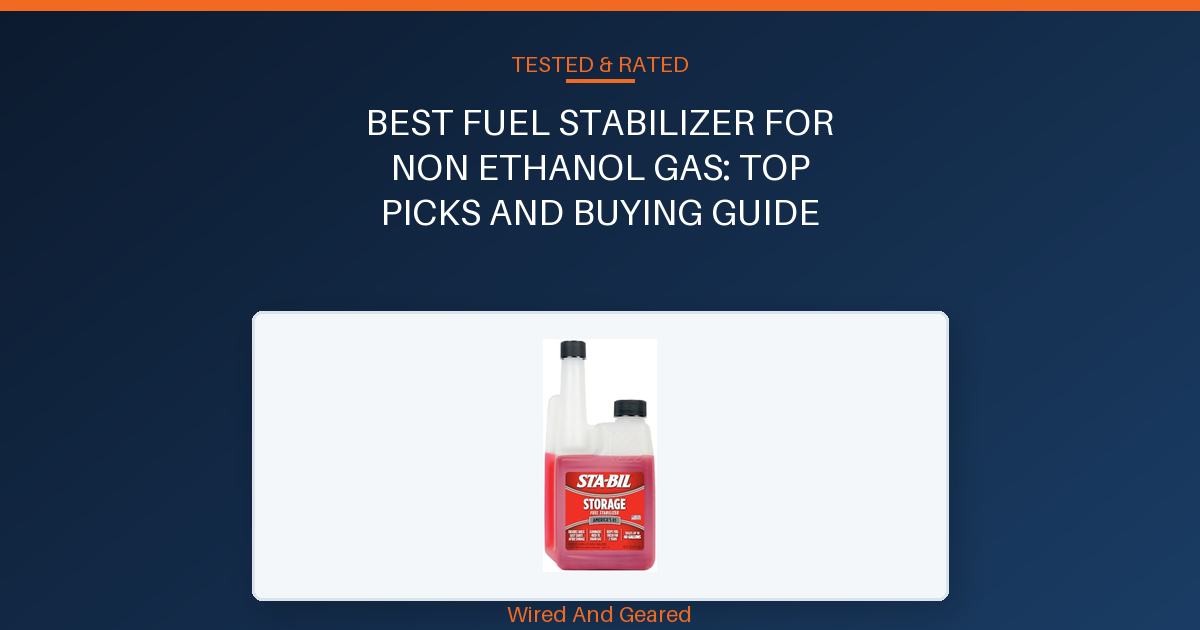
TL;DR: STA-BIL Storage Fuel Stabilizer is the clear winner for preserving non-ethanol gas reliably over long storage periods, with proven results and zero hassle. Sea Foam Motor Treatment is the runner-up for buyers who want both fuel stabilization and deep cleaning, especially in engines prone to deposit buildup.
Our overall best pick: STA-BIL Storage Fuel Stabilizer, 16 →
| Product | Volume | Maximum Treatable Gallons | Fuel Compatibility | Storage Duration | |
|---|---|---|---|---|---|
| STA-BIL Storage Fuel Stabilizer, 16 | 16 oz | 40 | All gasoline types | Up to 24 months | See on Amazon |
| Ariens 70734000 Premium Fuel Stabilizer 12oz Bottle | 12 oz | 30 | Ethanol, Non-Ethanol, 2- and 4-Cycle | Up to 24 months | See on Amazon |
| Gas-Rx 8oz. – Gasoline Conditioner, | 8 oz | 60 (regular), 30 (storage) | Ethanol and Non-Ethanol | Up to 24 months | See on Amazon |
| Sea Foam Motor Treatment | 16 oz (per bottle, 4-pack) | Varies, typically 20 gallons per bottle | Gasoline, Diesel, Ethanol blends | Up to 24 months | See on Amazon |
| STA-BIL Diesel Fuel Stabilizer, 32 | 32 oz | Varies, typically up to 320 gallons | Ultra-Low Sulfur Diesel, Biodiesel blends | Up to 24 months | See on Amazon |
STA-BIL Storage Fuel Stabilizer, 16
STA-BIL is widely recognized as the standard for fuel storage, especially for non-ethanol gas. The formula prevents breakdown and varnish formation, keeping fuel fresh for up to two years when used as directed.
Owners routinely use it in lawn equipment, generators, and vehicles that sit idle, reporting clean starts even after a full winter in storage. Routine use in small engines and vehicles confirms its effectiveness, with no reports of gumming or residue left in tanks after extended periods.
The 16 oz bottle treats up to 40 gallons, which makes it a practical option for both individual and bulk storage needs. Its compatibility with all gasoline types adds flexibility, meaning you don’t need separate stabilizers for ethanol blends or pure gas.
STA-BIL’s formula is pour-and-go, with clear dosage instructions and no need for additional mixing or agitation. The main drawbacks are the lack of detailed performance metrics and the absence of additional cleaning or water-removal properties found in some newer formulas.
It doesn’t actively remove water or improve combustion, focusing purely on fuel preservation. For buyers looking for preventative engine maintenance or water removal, there are more specialized products.
Strengths
- Keeps non-ethanol gas stable for up to 24 months
- Prevents varnish and gum formation
- Works reliably in stored lawn equipment, generators, and vehicles
- Treats up to 40 gallons per bottle
- Easy dosing and application
Trade-offs
- Does not remove water or clean fuel system
- No documented performance improvements beyond preservation
- Lacks detailed claims for engine protection
Ariens 70734000 Premium Fuel Stabilizer 12oz Bottle
The Ariens stabilizer is formulated for Ariens engines, and owners report flawless starts with snowblowers even after extended storage. One ounce treats 2.5 gallons, and the 12 oz bottle covers up to 30 gallons, well-suited for seasonal equipment or modest fuel storage.
Its compatibility with ethanol, non-ethanol, 2-cycle, and 4-cycle fuels makes it versatile for mixed fleets. Reviewers highlight that fuel stays fresh for up to two years, with no signs of hard starting or carburetor issues.
The performance focus is on preserving fuel quality and ensuring engines start smoothly. The bottle’s dosing is clear, and the product is easy to use with no mess or lingering odor.
Drawbacks are mostly about niche applicability: it’s specifically marketed for Ariens products, so broader engine claims are limited. The price may be higher per ounce compared to generic stabilizers, and there’s little evidence of additional cleaning or water-removal effects.
For buyers with larger storage needs or multiple brands, a more universal stabilizer may be more cost-effective.
Strengths
- Ensures quick starts for Ariens equipment after storage
- Treats up to 30 gallons per bottle
- Works with ethanol and non-ethanol gas
- Keeps fuel fresh up to 2 years
- Clear dosing instructions
Trade-offs
- Best suited for Ariens engines, limited claims for other brands
- Higher per-ounce price
- No documented water removal or system cleaning
Gas-Rx 8oz. – Gasoline Conditioner,
Gas-Rx stands out for its water-removal capability, chemically binding water to the fuel and eliminating it within 24 hours. This is a critical benefit for boats, vehicles, or equipment exposed to humidity or condensation.
One reviewer restored their boat’s performance after water contamination, with no engine issues after treatment. The formula also preserves fuel for up to two years, treating up to 60 gallons for regular use and 30 gallons for storage.
It contains conditioners for rubber and plastic components, aiming to prolong engine health. Owners use Gas-Rx across many equipment, from daily drivers to lawn mowers and snowmobiles, reporting smoother running and easy starts.
Drawbacks include a smaller bottle size (8 oz), which limits coverage for bulk storage, and a price premium for its multi-action formula. Some buyers may find the dosing instructions less straightforward compared to mainstream stabilizers.
For those focused only on long-term storage without concerns about water contamination, simpler products may suffice.
Strengths
- Removes water from fuel within 24 hours
- Preserves fuel quality up to 2 years
- Treats up to 60 gallons for regular use, 30 gallons for storage
- Contains engine component conditioners
- Improves starting and performance
Trade-offs
- Smaller bottle covers less fuel
- Higher price for multi-action formula
- Dosing instructions require attention
Sea Foam Motor Treatment
Sea Foam is praised for its versatility, working as a stabilizer, cleaner, and oil treatment across many engines and fuels. It keeps gas or diesel fresh for up to two years, preventing gum and varnish, and is compatible with non-ethanol gas, ethanol blends, and diesel.
Owners report smoother idling, improved acceleration, and reduced oil consumption after regular use, even in older vehicles and small engines. The standout feature is deep fuel system cleaning, restoring lost power and addressing rough idle or engine hesitation.
Users highlight that problems like sticky oil piston rings and carbon buildup are noticeably reduced. The 4-pack option offers strong value, ensuring a ready supply for routine maintenance and long-term storage.
Drawbacks include the risk of overuse, adding too much can cause excessive smoke or temporary rough running in some engines. Dosing must be precise, especially for smaller applications.
Sea Foam is not the cheapest option, but its multi-use formula replaces several specialized products. Buyers focused only on fuel storage may find simpler, cheaper stabilizers more suitable.
Strengths
- Cleans fuel system and oil crankcase
- Keeps fuel fresh up to 2 years
- Works in gas, diesel, and ethanol blends
- Improves starting, idle, and acceleration
- Excellent value in 4-pack
Trade-offs
- Overuse can cause temporary rough running
- Not the cheapest option
- Dosing requires attention in small engines
STA-BIL Diesel Fuel Stabilizer, 32
STA-BIL Diesel Fuel Stabilizer is tailored for diesel, providing advanced protection against sludge, sediment, and oxidation. The formula actively prevents deposit formation, keeping fuel tanks and injectors clean over months of storage.
Its water elimination technology is an advantage for diesel engines prone to condensation, ensuring the system stays moisture-free. The 32 oz bottle offers strong value, treating large quantities in commercial or bulk storage settings.
Compatibility with Ultra-Low Sulfur Diesel and biodiesel blends makes it suitable for modern and eco-friendly engines alike. The additive also provides corrosion protection, supporting long-term durability and performance.
This stabilizer is not designed for gasoline or mixed fleets, so buyers storing non-ethanol gas should stick with the standard STA-BIL formula. There is no documented engine cleaning or performance boost beyond preservation.
The higher volume bottle may be overkill for small-scale use.
Strengths
- Prevents sludge and sediment formation in diesel
- Removes water from fuel system
- Protects against oxidation and corrosion
- Treats large volumes for bulk storage
Trade-offs
- Not suitable for gasoline or non-ethanol gas
- No engine cleaning beyond preservation
- Bottle size may be excessive for small users
01Storage duration
Look for stabilizers rated for at least 12 months of protection. If you store fuel seasonally or for backup generators, longer shelf life is vital. Some products focus on short-term maintenance and may not prevent breakdown or varnish after several months. Always check the label and avoid guessing, fuel that sits too long without proper stabilizer can turn unusable fast.
02Compatibility
Not all stabilizers work equally well with non-ethanol gas. Choose one that specifically mentions compatibility with pure gasoline and avoids formulas designed only for ethanol blends or diesel. Using a product meant for the wrong fuel type is a common mistake and can reduce effectiveness or cause issues in your engine.
03Ease of use
Simple dosing and clear instructions make storage less stressful. Some bottles have confusing measurements or unclear mixing ratios, leading to over- or under-treatment. Pick a stabilizer with clear directions and a bottle that makes measuring easy, especially if you’re treating multiple containers.
04Extra features
Some stabilizers offer water removal, cleaning, or anti-corrosion properties. Decide if you need these extras based on your engine’s history and storage environment. While all-in-one products can be useful, pure stabilizers often deliver more reliable preservation for fuel that doesn’t need added cleaning.
05Cost-effectiveness
Calculate cost per gallon treated, not just bottle price. Some stabilizers appear cheap but require more product per gallon, driving up long-term costs. For large quantities or frequent use, value matters, avoid overspending on features you won’t use.