
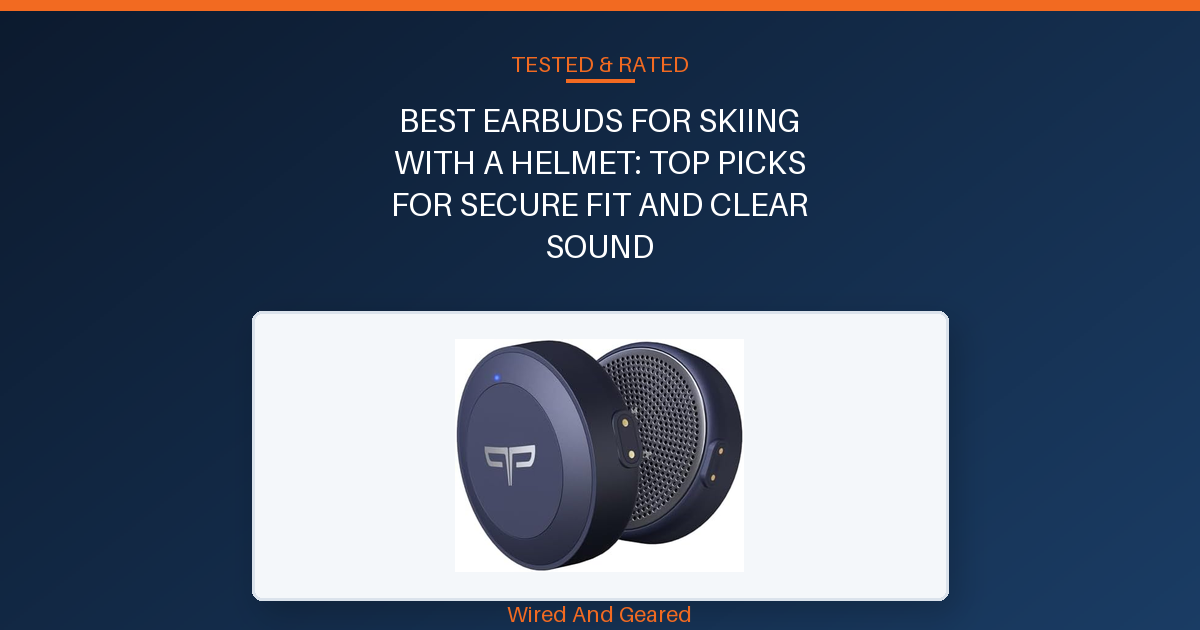
Picking the right earbuds for skiing with a helmet means balancing comfort, audio clarity, and controls you can use with gloves. A poor fit or weak battery can ruin your run, so this guide focuses on options designed specifically for helmet use.
These recommendations target skiers who want wireless convenience, secure placement, and enough volume to hear music or calls above wind and chatter. Each pick is tailored for practical, real-world conditions, not just specs.
You’ll see clear winners for different needs, with honest trade-offs spelled out. If you ski often or need to hear your surroundings, we highlight which models fit best and which ones to skip.
Scan the quick takeaways and buying guide for what matters most: battery, fit, controls, and sound quality. FAQs answer the specific questions skiers search for so you can make a confident choice.
Our overall best pick: Origem Ski Helmet Speakers, Wireless →
- Origem Ski Helmet Speakers, WirelessSee on Amazon →
- Doohoeek 2025 Ski Helmet SpeakerSee on Amazon →
- OutdoorMaster Ski Helmet Headphones Wireless BluetoothSee on Amazon →
| Product | Battery Life | Water Resistance | Bluetooth Version | Pad Thickness | |
|---|---|---|---|---|---|
| Origem Ski Helmet Speakers, Wireless | Multiple full days (charging case) | Not specified | 6.0 | Standard | See on Amazon |
| Doohoeek 2025 Ski Helmet Speaker | 50 hours (with charging case) | IPX5 | 5.3 | Ultra-thin | See on Amazon |
| OutdoorMaster Ski Helmet Headphones Wireless Bluetooth | 30 hours (with charging case) | Not specified | 5.3 | 13.7mm | See on Amazon |
| Ski Helmet Headphones,True Wireless Bluetooth | 9-10 hours (per charge) | Not specified | 5.3 | Thin | See on Amazon |
| Motorcycle Bluetooth Headset Speaker Skiing Earphone | 32 hours (continuous) | IPX6 | 5.3 | 10mm | See on Amazon |
Origem Ski Helmet Speakers, Wireless
Origem Ski Helmet Speakers excel at providing consistently loud audio and hassle-free charging, ideal for long ski days. The charging case works like AirPods, allowing multiple full days of skiing without plugging in.
Installation is simple with helmets that have earphone pockets, and the large control button is accessible with gloves, making volume and playback adjustments quick and easy. Sound quality is functional but not rich: vocals and treble are clear, but bass is notably thin.
These headphones do not reach ‘super loud’ volumes, but remain audible while maintaining awareness of surroundings, which is a safety plus. Fit varies, some helmets (like the Smith Method Pro Mips) offer a perfect fit, while others can be tricky if the pockets are small or tight.
The speaker pods can slip out of the charging ports if jostled, so keeping the case upright matters. Bluetooth pairing is straightforward, though switching between devices can be awkward.
Durability is solid, and the battery holds up for multiple sessions without needing a recharge. These speakers are best for skiers wanting reliable, loud audio and simple controls for all-day mountain use.
Skip them if you want deep bass or need a tight fit for smaller helmet pockets.
Strengths
- Loud audio preserves situational awareness
- Charging case provides multiple full ski days without recharge
- Fits most helmet audio pockets easily
- Glove-friendly controls
- Bluetooth pairing is fast and stable
Trade-offs
- Bass is weak, sound quality is not audiophile-grade
- Pods can slip out of charging case if bumped
- Fit may be loose in smaller helmet pockets
Doohoeek 2025 Ski Helmet Speaker
The Doohoeek 2025 Ski Helmet Speaker stands out for its ultra-thin design, which slips easily into audio-ready helmets without causing pressure or discomfort. The large, glove-friendly multifunction button makes pausing, changing volume, and skipping tracks effortless on the slopes, with clear tactile feedback even through thick gloves.
Bluetooth pairing is quick and reliable, maintaining a stable connection in cold conditions and during rapid movement, so you won’t be fiddling with your phone mid-run. Sound quality is clear enough for music and calls, but it is not exceptional.
Reviews consistently point out that these speakers are better than bone conduction options, but lack deep bass or high volume. Situational awareness is preserved, which helps for group skiing and safety.
Call clarity is a mixed bag: callers hear you well, but voices on the other end can sound muffled, especially in windy conditions. The IPX5 water resistance and rugged build hold up against snow and sweat, but should not be submerged.
Battery life is a highlight, with 50 hours available via the charging case and rapid top-ups. The LED display is a handy touch for tracking charge status.
This setup is ideal for frequent skiers who want music and hands-free controls without fiddling with earbuds or risking them falling out mid-run. Skip these if you demand audiophile sound or want louder volume for noisy environments.
Strengths
- Ultra-thin pads fit most helmet audio pockets without bulk
- Glove-friendly button for easy control
- Stable Bluetooth 5.3 connection
- IPX5 water resistance for snow and sweat
- 50-hour battery life with LED display charging case
Trade-offs
- Sound quality is average, lacks deep bass
- Call clarity is inconsistent for the person being called
- Volume is limited, not ideal for noisy lifts or fast runs
OutdoorMaster Ski Helmet Headphones Wireless Bluetooth
OutdoorMaster Ski Helmet Headphones are designed for harsh mountain conditions, performing reliably in temperatures from -20°C to 45°C. The drop-in design integrates smoothly into most audio-ready helmets, with easy Bluetooth 5.3 pairing and stable connection during fast descents.
The glove-friendly big button is a standout, letting you manage music and calls without removing gloves or fumbling with your phone. Sound quality is clear and loud enough to drown out wind or lift chatter, but bass depth falls short of premium models.
Battery life is excellent: up to 10 hours per charge, plus 20 more hours with the charging case, so you don’t have to worry about mid-day recharging. The fast-charging feature gets you back on the slopes quickly.
The microphone works for calls, but you’ll need to speak loudly to be heard, especially in noisy environments. Durability is strong, with reliable performance in frigid temperatures and rugged construction that endures daily use.
These headphones are best for skiers and snowboarders who prioritize convenience, battery endurance, and easy controls. Skip them if you want rich bass or true audiophile sound.
Strengths
- Consistent performance in extreme cold (-20°C)
- 30 hours total battery life with charging case
- Glove-friendly controls for quick adjustments
- Clear sound preserves situational awareness
- Easy installation in audio-ready helmets
Trade-offs
- Bass is weak compared to premium models
- Microphone requires loud speaking for calls
- Cannot turn off without removing from helmet
Ski Helmet Headphones,True Wireless Bluetooth
Jiuyunmu’s ski helmet headphones give you long-lasting battery and easy pairing for a budget price. Battery charge lasts for multiple full days, and the headphones can sit unused for months and still work, making them ideal for occasional skiers.
Controls are straightforward, with a large button for pausing and skipping tracks, accessible through gloves, so you won’t need to take off your helmet or gloves on the lift. Sound quality is adequate for casual listening, but lacks punch and clarity for music lovers.
Volume may need to be turned up inside a helmet, but situational awareness is maintained for safety. The cord connecting the speakers is a bit short, which can make placement awkward in some helmets.
The microphone works for calls, but isn’t voice-activated and lacks advanced noise reduction. Build quality holds up well, surviving multiple helmet swaps and regular use.
The drop-in design fits most helmet audio pockets, or can be adapted with a small slice if needed. These are best for budget-conscious skiers who want basic functionality and long battery life.
Skip if you want premium sound or need a longer cord for custom helmet fit.
Strengths
- Battery lasts multiple days, even after months unused
- Large button for glove-friendly control
- Easy pairing and setup
- Fits most helmet audio pockets
- Durable construction survives regular use
Trade-offs
- Sound quality is basic, lacks bass
- Cord between speakers is short for some helmets
- Microphone lacks voice activation and noise reduction
Motorcycle Bluetooth Headset Speaker Skiing Earphone
SUOOKC’s Bluetooth headset targets both motorcyclists and skiers, with ultra-thin 10mm pads that avoid ear pressure and fit all helmet designs. The IPX6 waterproof rating means you can use it in snow, rain, or dusty conditions without worry.
The 1000mAh battery provides up to 32 hours of continuous use and 360 hours standby, so you won’t need to charge mid-trip. Controls are glove-friendly, with a one-click voice assistant activation for hands-free navigation, calls, and music.
The headset can connect to two smartphones at once, making it versatile for multitasking. Noise cancellation is built-in, improving call clarity and audio in windy or noisy environments.
Type-C fast charging and battery level display add convenience for frequent users. Fit and comfort are strong suits, but sound quality and volume are not detailed in reviews, so audiophile needs may go unmet.
These headphones are best for skiers wanting waterproof, all-day audio and reliable call features. Skip if you demand high-fidelity music or detailed sound quality.
Strengths
- Ultra-thin 10mm pads fit all helmets comfortably
- IPX6 waterproof and dustproof for harsh weather
- 32-hour battery life and fast charging
- Noise cancellation improves calls
- Connects to two smartphones simultaneously
Trade-offs
- Sound quality and volume are not specified
- No audiophile-grade audio
- Controls and fit may be less refined than ski-specific models
01Secure fit under helmet
Earbuds must sit flat and stay in place during movement, otherwise they cause discomfort or fall out mid-run. Choose models designed for helmet ear pads or with low-profile shapes. Avoid bulky earbuds that press against your head or shift as you ski.
02Glove-friendly controls
Physical buttons are easier to use through helmet padding and gloves than touch sensors. Look for large, tactile controls or voice activation. Many standard earbuds have tiny controls that are impossible to press in cold gear.
03Battery life
Aim for at least 8 hours of battery to cover a day on the slopes. Shorter battery means frequent recharging or silent runs. Check real-world battery times, not just manufacturer claims, as cold temperatures can reduce performance.
04Sound quality and volume
Earbuds need enough volume and clarity to cut through wind and ambient noise. Prioritize models that maintain clear mids and highs, even if bass is weaker. Avoid units that distort or drop out at higher volumes.
05Water and sweat resistance
Some earbuds are only splash-proof, while others can handle snow and sweat exposure. True waterproofing is rare, but basic resistance is essential to prevent failure from moisture. Don’t rely on non-rated earbuds for extreme conditions.